
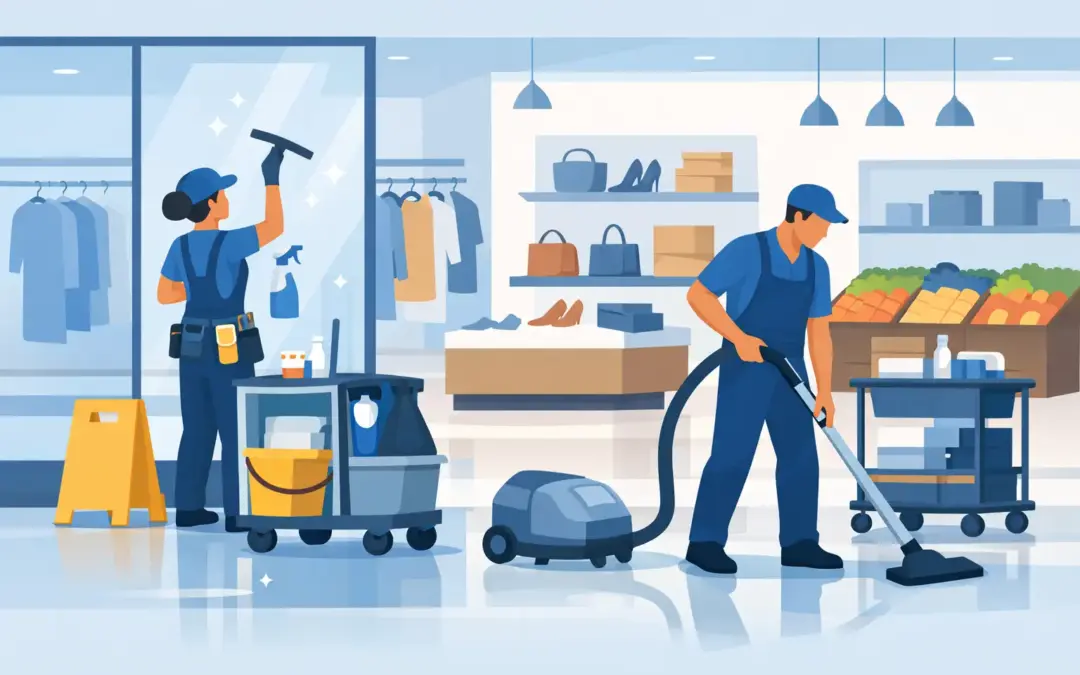
A customer may not comment on a freshly cleaned checkout counter, streak-free entry glass, or a restroom that smells clean. They will notice the opposite right away. In retail, the condition of the store becomes part of the customer experience, which is why dependable retail cleaning services are a practical business investment, not just a closing duty.
A clean store helps protect your brand, supports employee morale, and gives shoppers confidence in the products and people they encounter. The challenge is keeping that standard consistent during busy hours, changing seasons, promotions, and staffing changes without disrupting sales activity.
Why Retail Cleanliness Has a Direct Business Impact
Retail spaces collect the evidence of a busy day quickly. Foot traffic tracks in dirt, salt, water, and debris. Fingerprints build up on doors, display cases, carts, and payment terminals. Restrooms, fitting rooms, break areas, and checkout lanes all need regular attention, but they do not need the same cleaning approach or frequency.
When these details are missed, a store can feel neglected even if the merchandise is well organized. Customers may spend less time browsing, employees may feel less pride in the workplace, and managers are left handling preventable cleaning problems between more important responsibilities.
Professional cleaning also supports safety. Wet entrances, loose debris, dirty floors, and overflowing trash can create avoidable hazards. A cleaning plan that addresses these areas consistently helps keep the property inviting and operationally ready while reducing the need for staff to rush through cleaning tasks during a shift.
What Retail Cleaning Services Should Include
The right scope depends on the store’s size, layout, hours, customer volume, and the type of products sold. A small specialty shop has different needs than a large retail center, grocery-adjacent storefront, showroom, or multi-tenant commercial property. Still, a reliable service plan should cover the areas customers and staff use every day.
Customer-Facing Areas Need Daily Detail Work
Entrances create the first impression, so glass doors, door handles, mats, thresholds, and nearby floors deserve close attention. In wet or snowy weather, entryways may require more frequent service to prevent tracked-in grime and slippery conditions.
Inside the store, cleaners should focus on dusting accessible surfaces, wiping counters and fixtures, removing fingerprints from glass, emptying waste bins, and vacuuming or mopping floors according to the flooring type. High-touch points such as shopping baskets, carts, push plates, elevator buttons, and payment areas should be disinfected as part of the regular routine when applicable.
Display cleaning requires care. A provider should understand which surfaces can be cleaned safely and which products may damage finishes, screens, mirrors, specialty flooring, or merchandise. Thorough service should never come at the expense of a store’s inventory or presentation.
Restrooms, Fitting Rooms, and Staff Areas Require a Separate Standard
Restrooms often have the greatest influence on how customers judge a business. They should be cleaned and disinfected thoroughly, with attention to fixtures, partitions, mirrors, floors, dispensers, and odor control. Supplies should be monitored so employees are not surprised by empty soap, paper towel, or tissue dispensers.
Fitting rooms need prompt trash removal, floor care, and detailed attention to mirrors, benches, hooks, and handles. While they may appear simple, untidy fitting rooms can affect a shopper’s willingness to try on and purchase products.
Break rooms and back-of-house areas matter, too. These spaces support the people keeping the store open and serving customers. Regular cleaning of tables, sinks, appliances, floors, and waste areas creates a more hygienic workplace and helps prevent odors or pest concerns.
Build a Schedule Around Store Traffic, Not Convenience
The most effective retail cleaning plan is built around how the store actually operates. For many retailers, after-hours cleaning is the best option because it allows crews to complete floor care, restroom cleaning, trash removal, and detailed surface work without moving around customers or interrupting employees.
That does not mean every task must happen overnight. High-traffic locations may benefit from daytime porter service for restroom checks, spill response, entryway upkeep, and trash removal. A store with limited hours may only need several evening visits each week plus periodic deep cleaning. The best schedule is the one that maintains standards without paying for work the facility does not need.
Seasonality should also be considered. Utah winters can increase moisture, salt residue, and dirt at entrances. Holiday shopping periods can create more waste, fingerprints, and restroom traffic. A flexible provider can adjust the scope during these periods instead of treating every month exactly the same.
How to Evaluate a Retail Cleaning Provider
Price matters, but the lowest quote is not always the most economical choice. An incomplete scope, inconsistent staffing, missed visits, or poorly trained cleaners can lead to management time, customer complaints, and corrective work that costs more in the long run.
Ask potential providers how they tailor services to retail facilities. A useful proposal should identify the cleaning frequency, areas included, floor-care expectations, restroom procedures, supply responsibilities, and the process for handling special requests. Vague language can make it difficult to hold anyone accountable later.
It is also worth asking who will communicate with your team. Retail managers need a responsive point of contact when a spill, event, seasonal demand, or building issue changes the plan. Family-owned providers such as Lemon Cleaning can offer a more personal level of accountability, particularly when property managers need dependable service across multiple locations or tenant spaces.
Training and supervision are equally important. Cleaning teams should know how to work around retail fixtures, use appropriate products, follow safety procedures, secure the facility, and respect opening and closing protocols. Eco-friendly products can be a strong option when they are selected for both cleaning performance and the needs of the environment, occupants, and surfaces.
Set Clear Expectations From the Start
A strong cleaning relationship starts with a walkthrough. This gives the provider a chance to see the floor plan, identify high-touch zones, understand traffic patterns, and note any problem areas such as hard-water buildup, heavily soiled entrances, or specialty surfaces.
From there, establish a clear checklist and communication process. The checklist should define recurring work, while the communication process should make room for exceptions. A retailer may need extra service after a promotion, weather event, tenant turnover, inventory project, or community gathering. These requests are easier to manage when both sides know who to contact and what response to expect.
Quality checks should be ongoing, not reserved for the first week of service. Managers do not need to inspect every room every night, but they should be able to trust that concerns will be addressed promptly and that standards will remain consistent over time.
When Deep Cleaning Makes Sense
Recurring janitorial service handles the daily and weekly work that keeps a store presentable. Periodic deep cleaning addresses the buildup that routine service may not fully remove, especially in high-use areas.
Carpet extraction, hard-floor scrubbing and refinishing, high dusting, detailed restroom restoration, interior glass cleaning, and grout or baseboard cleaning may be scheduled quarterly, semiannually, or as needed. The correct interval depends on traffic, flooring, weather exposure, and the appearance standards of the business.
Deep cleaning is especially useful before a grand opening, after construction or remodeling, ahead of a major sale season, or when a property is preparing for a new tenant. It can restore the appearance of a space without requiring a full renovation or replacing surfaces prematurely.
A retail store should feel ready before the first customer walks through the door, not after employees have spent the morning catching up on cleaning. With a detailed scope, flexible scheduling, and a cleaning team that respects the way your business operates, cleanliness becomes one less daily concern for your staff.