
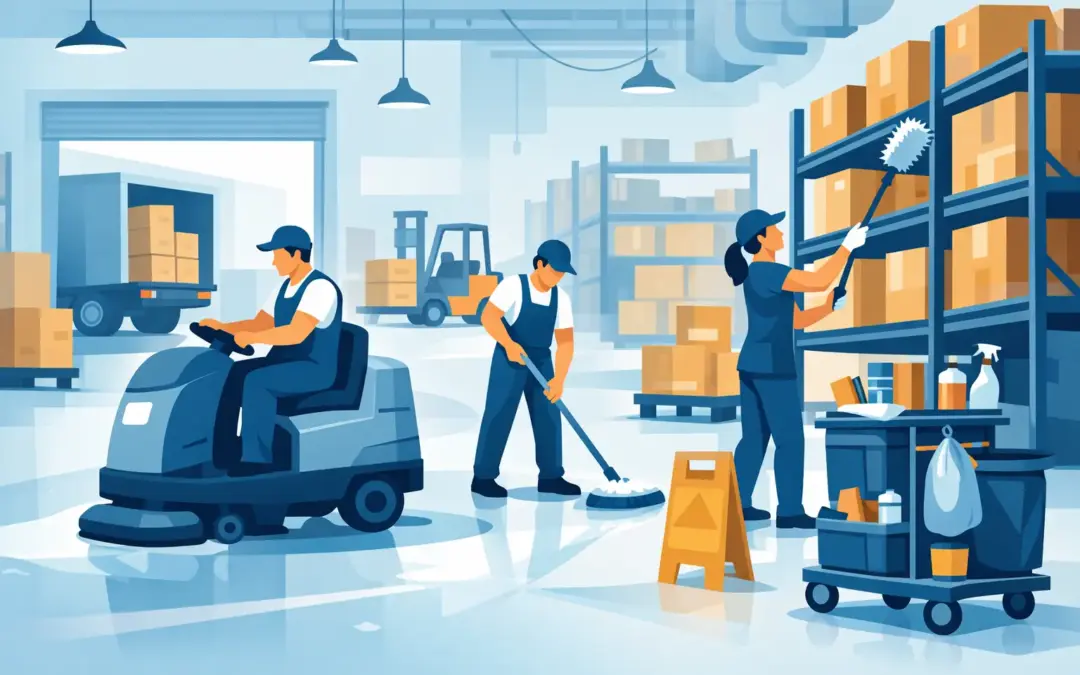
A warehouse can look busy and productive while quietly becoming harder to operate. Dust gathers on racking, debris collects near loading doors, spills go unnoticed in traffic lanes, and restrooms fall behind during peak shifts. Professional warehouse cleaning services address these day-to-day conditions before they affect safety, employee morale, inventory, or the impression made on visitors and customers.
For facility managers, the goal is not simply a cleaner building. It is a dependable cleaning plan that supports the pace, layout, and risks of the operation without getting in the way of receiving, picking, shipping, or production.
Why Warehouse Cleaning Requires a Different Approach
Warehouses are not offices with larger floors. They have forklift traffic, loading docks, high shelving, concrete surfaces, changing inventory levels, and areas where dust and residue can travel quickly. A cleaning plan that works in a small professional office may not be enough for a facility with active shipping lanes and multiple shifts.
The right approach starts with how the facility is used. A distribution warehouse may need frequent attention at dock doors and employee break areas, while a manufacturing-adjacent warehouse may have more dust, packaging waste, or residue near work zones. Food-related, medical, and regulated operations can have stricter sanitation expectations. Cleaning should match those conditions rather than follow a generic checklist.
Scheduling matters just as much. Cleaning crews should be able to work around operating hours, high-volume shipping windows, and restricted areas. In many cases, evening, overnight, or low-traffic service is the best fit. In others, daytime portering is necessary to keep restrooms, entrances, and spill-prone areas presentable throughout the shift.
What Warehouse Cleaning Services Should Cover
A strong service scope separates routine care from periodic deep cleaning. Routine work keeps the facility orderly and hygienic, while scheduled specialty work prevents buildup that can become a larger operational issue.
Floors, Traffic Lanes, and Dock Areas
Concrete floors take the most abuse in most warehouses. Dirt, pallet fragments, stretch wrap, cardboard, and tracked-in moisture can create trip and slip hazards. Regular sweeping, vacuuming where appropriate, and machine scrubbing help keep walking paths and high-traffic zones safer and easier to inspect.
Dock areas deserve close attention because they bring outdoor dust, debris, and moisture directly into the building. Cleaning around dock doors, receiving stations, staging areas, and entrances helps reduce the spread of dirt across the facility. It also gives managers a clearer view of damaged packaging, leaks, and other conditions that need attention.
The frequency depends on traffic and the type of materials handled. A lightly used storage building may need regular service a few times per week. A high-volume distribution center may benefit from daily cleaning, targeted service between shifts, or both.
Restrooms, Break Rooms, and Employee Areas
Employee-facing spaces shape how people feel about their workplace. A warehouse may be industrial, but its restrooms, lockers, break rooms, and shared touchpoints should still be clean, stocked, and hygienic.
Professional cleaning typically includes disinfecting restroom fixtures and high-touch surfaces, emptying waste, replenishing supplies, and cleaning floors. Break rooms need attention to tables, counters, sinks, appliances, and trash areas, especially where food waste can create odors or attract pests.
These areas often need more frequent service than the warehouse floor. A cleaning provider should adjust the plan based on headcount, shifts, and how heavily each space is used.
Offices, Entrances, and Customer-Facing Spaces
Many warehouses include dispatch offices, management workstations, training rooms, conference spaces, and reception areas. These spaces should receive the same consistent care as any professional office environment. Dusting, vacuuming, trash removal, restroom care, and touchpoint disinfection help staff stay focused and give vendors, drivers, and visitors confidence in the operation.
Entryways also deserve attention. Clean glass, maintained mats, and debris-free walkways create a more organized first impression while reducing the amount of dirt tracked into the building.
High Dusting and Detail Work
Dust does not stay on the floor. It settles on ledges, vents, beams, racking supports, light fixtures, and equipment exteriors. Over time, buildup can make a facility look neglected and may contribute to air-quality concerns in certain environments.
High dusting and detail cleaning should be planned carefully, with the correct equipment and safety procedures for the space. This work may be completed monthly, quarterly, or on another schedule based on the building’s conditions. It should never interfere with active operations or create a hazard below, which is why clear coordination with the facility team is essential.
How to Build a Cleaning Plan That Fits Your Facility
The best warehouse cleaning plans begin with a walkthrough. A provider should ask practical questions about square footage, shift schedules, staffing levels, forklift routes, loading activity, waste volume, sensitive inventory, and any areas that require restricted access. A quote should reflect the real scope of work, not just the building size.
Start by identifying the areas that create the greatest day-to-day risk or frustration. For some facilities, that is dirty restrooms by mid-shift. For others, it is dust at receiving doors, overflowing trash near packing stations, or neglected office areas. Prioritizing these concerns creates immediate value while helping establish a realistic recurring schedule.
It also helps to define service standards clearly. Rather than requesting that a space be cleaned “as needed,” identify expected tasks, frequencies, supply responsibilities, and procedures for reporting spills, damage, or access concerns. Clear expectations protect both the client and the cleaning team.
A flexible plan should leave room for seasonal changes. Utah winters can bring snow, salt, and wet floors into warehouse entrances and dock areas. During high-volume periods, more frequent trash removal or restroom attention may be necessary. A responsive provider can adjust service without forcing a facility to manage cleaning problems internally.
Safety, Products, and Equipment Matter
Warehouse cleaning is closely connected to safety. Cleaning teams should understand how to work around active equipment, marked traffic lanes, stored materials, and loading operations. Wet-floor procedures, proper signage, safe chemical handling, and communication with on-site contacts are basic requirements, not extras.
The products and equipment used should fit the facility. Eco-friendly cleaning products can support a healthier work environment when selected for the surface and task at hand. At the same time, a provider must use effective solutions for grease, restroom sanitation, floor soil, and other specific cleaning challenges. Green products should not mean lower cleaning standards.
Advanced equipment can make a meaningful difference in large spaces. Commercial floor machines, HEPA-filter vacuums, microfiber systems, and appropriate high-dusting tools help crews clean thoroughly and efficiently. Still, equipment is only as effective as the people operating it. Trained staff, consistent supervision, and accountability are what turn a cleaning plan into reliable results.
Signs It Is Time to Change Cleaning Providers
Occasional issues happen in any active facility. The concern is a pattern of missed work, poor communication, or a provider that does not adjust when the operation changes. If employees regularly report dirty restrooms, dust buildup returns quickly, trash areas are neglected, or service disrupts workflow, the existing scope may no longer fit the building.
Another sign is a lack of visibility. Facility managers should know who to contact, what work is scheduled, and how concerns will be resolved. A local, owner-led cleaning partner can be especially valuable when a facility needs direct communication and fast follow-through rather than a distant call center.
At Lemon Cleaning, warehouse service is built around detailed scopes, trained cleaning teams, flexible scheduling, and the highest standards of cleanliness. The objective is straightforward: keep the facility hygienic, presentable, and ready for the work happening inside it.
A clean warehouse will not replace good safety practices or strong operations management, but it gives both a better foundation. Walk your facility at the end of a busy shift, notice where dirt and disorder are slowing people down, and use those observations to build a cleaning plan that works as hard as your team does.