
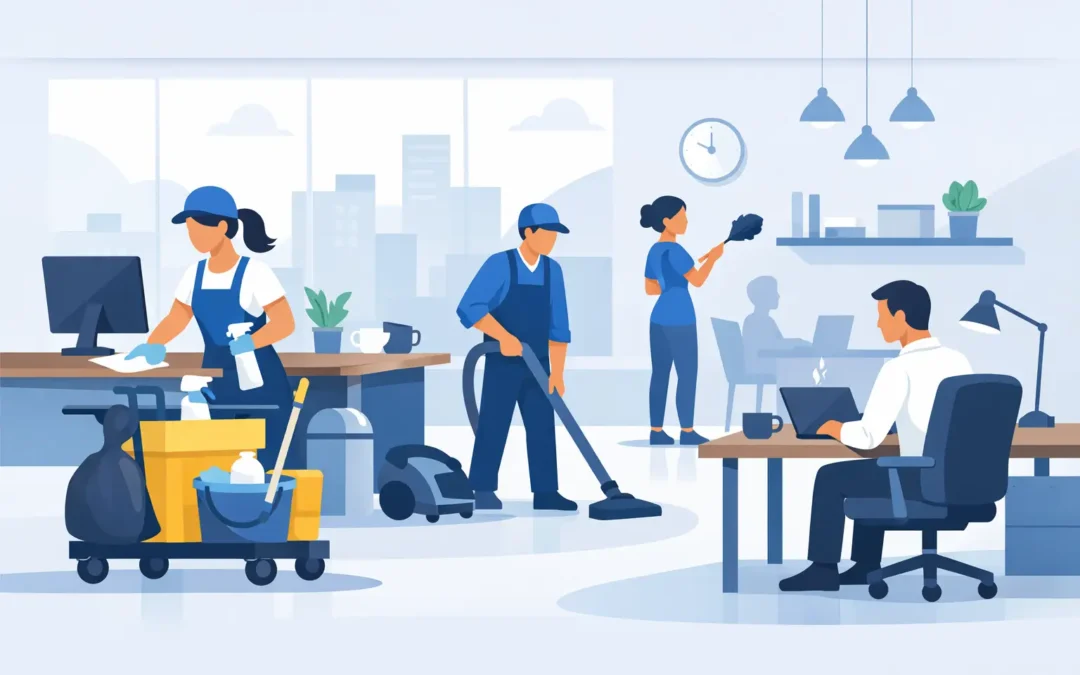
At 8:05 on a Monday morning, employees and visitors notice the details before the first meeting begins: fingerprints on the entry glass, a full trash can near the break room, streaks on the lobby floor, or a restroom that does not feel fresh. Office cleaning is not just a background task. It shapes how people experience your workplace, how comfortably employees work, and how confidently clients view your business.
For office managers, property managers, and business owners, the goal is simple: a spotless, hygienic space that is ready for work without disrupting the people doing it. Reaching that standard requires more than an occasional vacuum and emptying trash bins. It takes a cleaning scope that matches the building, a schedule that fits operations, and a team that follows through consistently.
What Reliable Office Cleaning Should Cover
Every office has different traffic patterns, but the areas people touch, see, and share need regular attention. A dependable service starts with the basics: removing trash and recycling, vacuuming carpets, mopping hard floors, cleaning restrooms, wiping break room surfaces, and dusting accessible furniture and fixtures. Those tasks create the baseline for a professional environment.
The difference is in the details. High-touch surfaces such as door handles, light switches, elevator buttons, reception counters, shared desks, and conference room tables can quickly collect grime and germs. Restrooms need careful attention to dispensers, partitions, fixtures, floors, and odor control. Break rooms need more than a wiped countertop when microwaves, sinks, tables, and appliance handles are used throughout the day.
A good cleaning plan also accounts for the spaces that affect first impressions. Reception areas, glass entry doors, waiting rooms, hallways, and conference rooms should look orderly and cared for because they are often the first areas visitors see. In multi-tenant properties, common areas may need a separate schedule from individual suites because their use is heavier and less predictable.
Cleaning Frequency Depends on How the Office Is Used
Daily service is often the right fit for busy offices, medical-adjacent workplaces, customer-facing businesses, and facilities with large teams. It helps keep restrooms stocked and sanitary, removes daily waste, and prevents high-traffic floors from looking worn between cleanings.
A smaller professional office may be well served by two or three visits each week, especially when most employees work remotely or foot traffic is limited. Weekly service can work for very low-traffic spaces, but it has trade-offs. Trash, restroom needs, and floors can become noticeable quickly, particularly after meetings, events, or a busy stretch of in-office work.
The right frequency should be based on occupancy, visitor volume, restroom usage, floor types, break room activity, and the expectations of your clients and staff. A cleaning provider should ask these questions before recommending a scope instead of offering a one-size-fits-all package.
Office Cleaning That Works Around Operations
Cleaning is most effective when it does not interrupt the workday. Many offices prefer evening or early-morning service so cleaners can work thoroughly without navigating around calls, meetings, and employees. Others need daytime porters for restroom checks, spill response, lobby upkeep, or high-traffic common areas.
Neither approach is automatically better. After-hours cleaning gives teams clear access to desks, floors, and shared areas. Daytime service provides visible support and quick attention when a problem arises. Some facilities benefit from both: a detailed evening clean paired with limited daytime checks for public-facing spaces.
Clear communication matters as much as scheduling. Building access procedures, alarm instructions, restricted areas, key contacts, and special event needs should be documented from the start. When a cleaning team knows which conference room has an early client presentation or which office must remain undisturbed, it can protect your operations while delivering thorough work.
Hygiene Is a Workplace Standard, Not an Extra
Office cleanliness affects more than appearance. Shared workplaces bring together employees, visitors, vendors, and delivery personnel who touch the same doors, counters, appliances, and restroom fixtures. Consistent cleaning and disinfection of appropriate high-touch surfaces supports a healthier environment and helps facilities stay ready for ordinary daily use.
It is also important to distinguish cleaning from disinfecting. Cleaning removes dirt, dust, and residue. Disinfecting uses the right product and contact time to reduce germs on suitable surfaces. Both have a place in a well-managed office, but not every surface needs the same process or product.
Eco-friendly cleaning products can be a practical choice for offices that want to reduce harsh odors and chemical exposure while maintaining effective results. The best approach depends on the facility, its occupants, and any industry-specific requirements. A clinic, daycare, financial institution, and traditional office may all need different protocols, even if they share similar-looking spaces.
Floors, Glass, and Restrooms Carry the Most Visual Weight
Some cleaning tasks have an outsized effect on how well a workplace is perceived. Floors are one of them. Entryways collect salt, dirt, moisture, and debris, especially during Utah weather changes. Carpet needs regular vacuuming and periodic deep cleaning to protect appearance and extend its usable life. Hard floors may require routine mopping along with scheduled scrubbing, burnishing, or refinishing depending on the material and traffic level.
Glass is another highly visible surface. Smudged entry doors and interior glass partitions can make an otherwise clean office feel neglected. Regular spot cleaning may be enough for interior glass, while exterior windows and high glass may require specialized service.
Restrooms deserve the most consistent quality control. Employees may tolerate a cluttered supply closet, but they will notice an empty soap dispenser, unpleasant odor, stained fixture, or wet floor immediately. A proper restroom routine includes cleaning and disinfecting fixtures, refilling consumables, wiping touchpoints, checking floors, and addressing issues before they become complaints.
How to Evaluate a Commercial Cleaning Partner
Price matters, but the lowest quote does not always represent the best value. A scope that leaves out restocking, high-touch disinfection, periodic floor care, or quality checks can lead to gaps that your staff ends up managing. Compare what each proposal includes, how often each task will be completed, and what happens when needs change.
Ask how the provider trains its team, handles security and access, communicates service issues, and inspects completed work. You should also understand whether the company can adjust for seasonal needs, employee events, tenant turnover, or a sudden increase in traffic. Reliability is built through systems, but it also depends on having a responsive point of contact who takes responsibility for the facility.
For Ogden-area businesses, a local, owner-led provider such as Lemon Cleaning can offer the personal accountability of a family-owned company while building a service plan around the way your facility actually operates. The right partner should feel like an extension of your operations team, not another vendor you need to chase.
When an Office Needs More Than Routine Service
Recurring cleaning keeps a workplace in order, but periodic specialized work protects the space over time. Carpet extraction, floor refinishing, detailed restroom restoration, high dusting, interior glass cleaning, post-construction cleanup, and event cleanup may be needed outside the normal routine.
These services should be planned before appearance declines or a major event exposes the issue. For example, scheduling carpet care before winter weather or a busy client season can prevent stains and traffic lanes from becoming the first thing visitors notice. Periodic service also helps facility managers budget for maintenance rather than reacting to a preventable problem.
A clean office tells employees that their workplace is cared for and tells visitors that details matter. Set a standard that fits your facility, review it as your needs change, and choose a cleaning team that can meet it quietly, consistently, and with care.